

Packaging Inserts- Selecting Guide & why
- Imagine Crafter

- 2024年12月13日
- 讀畢需時 2 分鐘
Inserts of packaging is related to your production cost and environmental policies. Having a smart choice would determine your business success. As a packaging expert, I would like to tell you how you can find the most compatible insert for your package.
A packaging insert provides an additional surprise to customers when they receive the product, supports potential sales, stimulates customer feedback, and helps building a closer connection with the target market. If this interests you, this article will provide a detailed introduction to choosing and customizing the right packaging insert and the benefits it brings.
What is a packaging insert?
Simply put, a packaging insert is an additional structure placed inside the packaging box to protect the product and enhance the unboxing experience.
What are the common types of packaging inserts?

Here are some common insert materials:
Cardboard Insert (Corrugated paper, Cardboard/250g)
Advantages: Eco-friendly, recyclable, low cost, adaptable to various shapes and structures, can be combined with printing, foil stamping, etc., to enhance aesthetics.
Disadvantages: Not ideal for heavy or fragile products, vulnerable to moisture, can soften and deform when exposed to dampness.
Suitable for: Food, electronic products, cosmetics, stationery, jewelry, and other packaging.

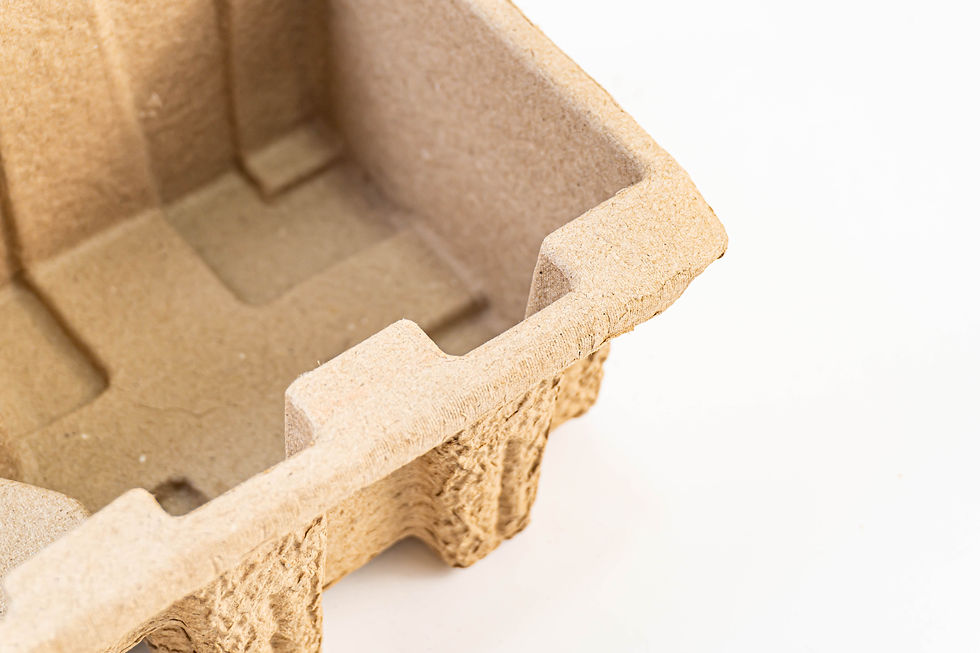
Pulp Insert (Pulp)
Advantages: Eco-friendly, biodegradable, non-polluting, good cushioning, strong customizability, good moisture resistance, easy to process.
Disadvantages: Poor durability, limited moisture resistance, limited load-bearing capacity.
Suitable for: Cosmetics, electronics, food, and other types of packaging.
EVA Insert (Ethylene-Vinyl Acetate Copolymer)
Advantages: Moisture-proof, shockproof, pressure-resistant, good toughness, bendable, customizable shape.
Disadvantages: May have a strong initial odor, relatively higher cost.
Suitable for: High-end gift boxes, luxury packaging, etc.

EPE Insert (Recycled Polyethylene)
Advantages: Eco-friendly, recyclable, water-resistant, shockproof, soundproof, thermal insulation, strong moldability.
Disadvantages: Large air bubbles, low density, poor heat resistance, flammable, not resistant to strong acids or alkalis.
Suitable for: Electronics, instruments, home goods, toys, crafts, and other packaging.

Sponge Insert (Mainly Polyurethane)
Advantages: Poor eco-friendliness, soft and lightweight, good elasticity, shockproof, scratch-resistant, customizable shape, easy to process.
Disadvantages: Low strength, prone to deformation, poor durability, easily soiled and damaged, not suitable for long-term use.
Suitable for: Cosmetics, electronics, instruments, precision equipment, etc.

Plastic Insert (PVC, PET, PP, etc.)
Advantages: Poor eco-friendliness, strong protection, excellent display effect, product fixation, shockproof, scratch-resistant, product visibility, enhances display value.
Disadvantages: High cost, environmental impact, requires consideration of recycling and degradation.
Suitable for: Electronics, toys, cosmetics, food, pharmaceuticals, and other fields.

These packaging materials each have unique advantages. Depending on the product's needs, you can choose the most suitable type of insert. You can also unleash your creativity and design custom inserts tailored to your brand.
Through exquisite packaging inserts, you can more effectively help build and maintain a loyal customer base for your brand. We hope this article provides valuable insights and helps you make more informed packaging decisions.
IMAGINE CRAFT, as a professional packaging supplier, is committed to providing high-quality, eco-friendly, and innovative packaging inserts.
Question: Can eco-friendly material inserts provide adequate protection for all types of products? How can we ensure that eco-friendly packaging is not just a buzzword but a genuinely sustainable solution?
留言